pdf editor: Ultimate Online All-in-One PDF Editing & Conversion Tool

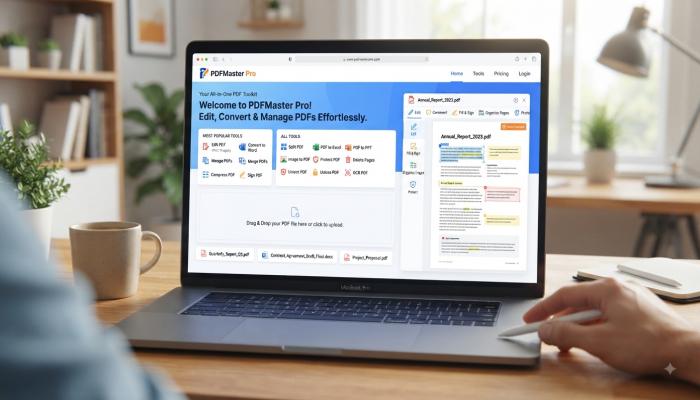
Introduction
With remote work and digital workflows on the rise, having a versatile online PDF editor is essential. Instead of installing heavy software, you can use a browser-based PDF editor to edit text, insert images, compress files, convert between formats, fill forms, and add signatures—all from any device. This guide covers the benefits of online PDF editing tools and compares the top 6 all-in-one online PDF editors. You’ll also find step-by-step instructions for common PDF tasks, best practices for accessibility and security, troubleshooting tips, and FAQs to help you master PDF editing in 2026.
Mermaid workflows help visualize the process:

PDF DocumentEdit Text/ImagesConvert/ExportAdd Digital SignatureCompress File SizeSave/Export Final PDFShow code
Assumptions: This guide assumes you have a stable internet connection and a modern browser (Chrome, Firefox, Edge, etc.). We focus on general workflows; exact steps may vary slightly by tool. We also assume basic familiarity with PDFs.
Benefits of Online PDF Editors
Online PDF editors have many advantages over traditional desktop software:
- No Installation Needed: Work on any device through a browser. There’s no bulky software to download, saving time and system resources.
- Access Anywhere: You can edit PDFs on Windows, Mac, Linux, tablets, or smartphones. Cloud storage integration (like Google Drive or Dropbox) means your docs go with you.
- Free and Affordable: Many online PDF editors offer free tiers for basic tasks (annotating, signing, compressing). Premium plans unlock advanced features (OCR, unlimited conversions) at reasonable prices.
- Fast and Easy: These tools streamline workflows. For example, drag-and-drop editing, templates, and one-click conversions make quick edits and conversions effortless.
- Collaboration: Share links for others to review or fill forms. Some editors allow collaborative commenting and version tracking.
- Security: Good editors use encryption and let you password-protect PDFs. When done, files are automatically deleted or stored securely, preserving privacy.
- Accessibility: Online editors often support accessibility tags and OCR, helping screen readers process PDFs and making content more usable for everyone.
Image: Workflow Illustration – Below is an example of using an online PDF editor to review and annotate a document. This illustrates tasks like highlighting text, adding notes, and e-signing a form in a browser.
Image: Overhead view of a person at a desk working on documents with a laptop and tablet, representing online PDF editing workflow. (Alt: “Person working at a desk with laptop, tablet, and papers, illustrating digital PDF editing and signing.”)
In summary, online PDF editors combine the convenience of cloud access with a wide toolset (editing, conversion, signing) in one place. Next, we compare the most popular solutions side-by-side.
Top 6 All-In-One Online PDF Editors (Feature Comparison)
The table below compares six leading online PDF editors on key aspects: free tier availability, main features, pros, cons, pricing, and links to official sources. These tools are among the best choices in 2026 for editing, converting, and managing PDFs in one platform.
| Product | Free Tier | Key Features | Pros | Cons | Pricing | Official Link |
|---|---|---|---|---|---|---|
| Adobe Acrobat | Yes – Free online editor (limited features) | Full text/image editing, annotate, fill forms, sign, convert, compress, OCR, cloud sharing | Industry-standard, comprehensive tools, high PDF fidelity, AI tools in Pro version | Most expensive ($12.99–$19.99/mo for desktop apps); free web tools are basic | Free: Browser editor (comments, fill/sign)<br>Paid: Acrobat Standard ~$12.99/mo, Pro ~$19.99/mo (subscriptions) | Adobe Acrobat Online |
| Foxit PDF Editor | No (Reader only) | Create/edit text/images, annotate, OCR, form fill, convert (to/from Office), protect, e-sign | Lightweight, cheaper than Adobe, multi-platform (Windows/Mac/Web/Mobile), supports AI assistant, ConnectedPDF | No free editing (only Reader). Learning curve for advanced features. | No free edit version (Reader is free).<br>Paid: Professional ~$129.99/yr or $10.99/mo (cloud version). | Foxit PDF Editor |
| Smallpdf | Yes – Free with usage limits (2 tasks/day) | 21+ tools: edit PDF (text, shapes, annotate), convert to/from Word/Excel/PPT/Images, merge/split, sign, compress, OCR, AI tools | Very easy to use; broad toolset; cloud sync (Dropbox/Drive); free tier available | Free usage limited per day; need login for extended use. Desktop app requires subscription. | Free: 2 edits/tasks per day.<br>Pro: ~$12/mo (annual) or ~$6-$7/mo on sale. Team plans ~$8/mo (per user, annual). | Smallpdf Editor |
| iLovePDF | Yes – Free basic use (limited daily use) | 20+ tools: merge/split, convert to/from Office, compress, annotate, sign, OCR, watermark, unlock, etc. | All-in-one suite (as “PDF lovers” slogan says); very generous free tools; simple interface | Free version has limits (file size, daily conversions); must upgrade for unlimited and advanced features. | Free: Essential tools (merge, split, compress) with limitations. Premium: ~$5–$7/mo (annual). Team pricing available. | iLovePDF Tools |
| PDFescape | Yes – Free forever (online editor) | Edit PDFs online (add text/annotations, fill forms), page reordering, form creation, e-sign (PDFescape Pro), password protect | Truly free basic editor (no watermark); form fill and annotation; easy interface | Free version limits: 10 MB file, 100 pages max, ads, 7-day history. Advanced editing (text editing, merging) requires paid plan. | Free: Basic online editor.<br>Premium: $2.99/mo (annual) or $5.99/mo (monthly).<br>Ultimate: $5.99/mo (annual) or $8.99/mo (monthly) (adds desktop app and advanced tools). | PDFescape |
| Canva PDF Editor | Yes – Free browser-based editor | Drag-and-drop design editor, text & image editing, templates, merge PDFs, add comments/annotations, some fill/sign support | Very intuitive; excellent for visually-rich PDFs (flyers, reports); free to edit PDFs as designs | Lacks PDF-specific features like OCR and advanced digital signing. Optimized for design, not heavy PDF tasks. Free core editor; some assets behind Pro plan. | Free: Core PDF editing and design features.<br>Pro: $15/mo (annual $120) or $12.99/mo per user for premium assets and team tools. Education/nonprofit grants available. | See official Canva PDF Editor info (limited online preview) |
- Adobe Acrobat (Pro & Online tools) – As the creator of PDF, Adobe offers comprehensive editing and AI-powered features. Their free online editor handles comments, text boxes, highlighting, drawings, form fill & sign. Pros: unmatched feature set (OCR, redaction, AI Assistant for summarization). Cons: expensive subscriptions for full editing (Acrobat Pro ~£19.99/mo).
- Foxit PDF Editor – A popular Adobe alternative. Foxit’s full editor works on desktop and web, with OCR and connected cloud storage. There’s no free editing version (only Foxit Reader). Pros: cheaper than Adobe (~£129.99/year), lightweight and feature-rich. Cons: no free web editor; advanced UI might overwhelm casual users.
- Smallpdf – A Swiss-made all-in-one PDF toolkit. Its online editor and 20+ tools cover editing, converting (to Word/Excel/PPT), merging, splitting, signing, compressing, OCR, and even AI features. Pros: very user-friendly interface, multiple file formats supported, connected apps (Google/Dropbox). Free plan allows 2 tasks per day. Cons: monthly limits unless you upgrade to Pro ($12/mo).
- iLovePDF – Marketed as the ultimate toolkit for “PDF lovers,” it offers fully free basic tools (merge, split, compress, convert, etc.). Pros: extremely generous free service; UI is straightforward. Cons: limits on file size/number of tasks; full suite (including OCR, e-sign) requires Premium (~£5–£7/mo).
- PDFescape – A no-frills web editor. The free online version lets you annotate, fill forms, and rearrange pages without any watermark or charge. Pros: truly free for basic use, easy form tools. Cons: free version has very strict limits (max 10 MB, ads, limited file history). Premium plans (from £2.99/mo) add full editing and a desktop app.
- Canva PDF Editor – Part of Canva’s design platform. It treats PDFs like design projects: you upload a PDF, and it becomes editable in Canva’s drag-and-drop interface. Pros: intuitive, great for flyers/brochures, free core editing. Cons: no OCR, limited sign workflows. Good for quick typos or layout changes. The base PDF editing is free; premium assets/tools cost extra.
Each tool has its niche. For heavy-duty text editing, signing and security, Adobe or Foxit excel. For quick free edits and conversions, Smallpdf or iLovePDF are excellent choices. Canva is ideal if design is your focus. PDFescape is useful for form filling and basic tasks without install.
Also Read: Claude AI: The Complete Beginner’s Guide (2025)
How-To Guide: Common PDF Tasks
Below are step-by-step guides for common tasks in any online PDF editor. The exact UI varies, but the general workflow is similar:
- Edit PDF Text and Images:
- Open/Upload PDF: Go to the editor’s “Upload” or “Open File” and select your PDF. The tool loads it in the browser.
- Edit Text: Click on existing text to edit it, or use an Add Text or Edit tool to insert new words. Change font, size, color as needed.
- Edit Images: Select an image and use replace/resize tools. Drag-and-drop image files if adding new visuals.
- Annotate/Highlight: Use comment, highlight, underline or freehand drawing tools to mark up content (great for reviews).
- Save/Export: Once done, click Save or Export to download the updated PDF.
- Example: On Smallpdf’s online editor, you can click “Choose Files” to upload, then select tools like “Add Text” or “Edit content” (the toolbar is intuitive).
- Convert PDFs to/from Other Formats:
- Locate Conversion Tool: Most suites have separate conversion tools (e.g. “PDF to Word”, “Word to PDF”).
- Convert from PDF: Upload the PDF to the converter. Click to convert (e.g. PDF→Word). Download the resulting .docx/.xlsx/.pptx.
- Convert to PDF: Similarly, upload a Word/Excel/PPT or image file and convert it to PDF. Ensure formatting before saving.
- Tips: Converters in Adobe, Smallpdf, or Foxit generally preserve formatting. For scanned PDFs, run OCR first if you need editable text.
- LSI example: “convert PDF to Word online”, “PDF to JPG converter”.
- Compress PDF Files:
- Open Compress Tool: Use the “Compress PDF” or “Optimize PDF” feature.
- Upload & Compress: Upload the PDF. The tool will reduce images and remove unnecessary data.
- Choose Quality: Some tools offer compression levels (e.g. high quality vs maximum reduction). Select desired balance.
- Download Result: Save the compressed PDF. Check for legibility after compression.
- Why: This makes large documents manageable for email or web use.
- Security Note: Ensure your file isn’t private if using third-party servers; many delete files after processing.
- Add Digital Signatures:
- Select Sign Tool: Most editors have a Sign PDF or Fill & Sign feature.
- Create Signature: Draw, type, or upload your signature graphic (once per session) and place it in the document. Alternatively, type your name in cursive font.
- Add Additional Signers: If needed, request signatures via email link (Adobe Sign, Foxit eSign, iLovePDF Sign).
- Finalize: Save or “Apply” to lock the signature. Download the signed PDF. Some tools lock it so edits can’t remove the signature.
- Example: Adobe’s free Fill & Sign lets you drop a signature onto the PDF. iLovePDF has a dedicated “Sign PDF” tool. Ensure signatures are legally recognized by using secure workflows (many tools comply with e-sign laws).
- Fill Out PDF Forms:
- Open the PDF Form: Upload any fillable PDF (like a tax form or application).
- Use Form Fields: If the form is interactive, click fields to enter data. For static PDFs, use text boxes.
- Check Boxes/Dropdowns: Use the editor’s tools to check boxes or select from lists.
- Save/Export: Download the filled PDF. Optional: Print or email directly from the tool.
- Pro Tip: Some editors (PDFescape, Adobe, Foxit) allow you to create new form fields if the PDF wasn’t originally fillable.
By following these steps with any all-in-one PDF editor (Adobe Acrobat Online, Foxit Web, Smallpdf, etc.), you can edit text, convert file formats, compress sizes, sign documents, and fill forms without printing or additional software.
Image: Person using a stylus on a tablet to sign a digital document, illustrating e-signature and editing tasks with a PDF editor. (Alt: “Hands of a person using a stylus pen to sign a document on a tablet computer.”)
Best Practices: Accessibility and Security
When editing PDFs online, follow these best practices:
- Use Encryption and Passwords: Protect sensitive PDFs with strong passwords or encryption (most editors have Protect PDF features). Only share passwords through secure channels.
- Redact Sensitive Info: When sharing drafts, use redaction tools to remove confidential data. Some editors (Foxit, Acrobat, PDFescape) offer redaction functions.
- Accessibility Tags: Ensure PDFs remain accessible. Run an accessibility check or tag content (headings, alt text for images, readable text order). For scanned documents, use OCR first so text can be read by screen readers.
- Use Alt Text: Add alt text for images. If your online editor supports adding image descriptions, do so. This helps vision-impaired users.
- Trusted Sources and SSL: Choose reputable editors (like Adobe, Foxit, Smallpdf). Verify the site uses HTTPS so files are encrypted in transit.
- Data Privacy: Check the editor’s privacy policy. Good services auto-delete uploaded files after a short time (Adobe deletes files unless saved).
- Backup Originals: Always keep a backup copy of original PDFs before editing. If formatting gets messed up, you can revert.
- Version Control: For collaborative work, consider version history features or save iterative copies, so you can undo mistakes.
- Stay Updated: Use updated browsers and avoid editing extremely sensitive documents on public Wi-Fi to reduce security risk.
Following these practices ensures your edited PDFs remain accessible, secure, and compliant.
Troubleshooting Tips
- Cannot Edit PDF: Some PDFs have restrictions. Ensure the file is not password-locked (or enter the owner password). If still blocked, print to PDF using “Print to Adobe PDF” and try editing the new file.
- Formatting Issues After Conversion: Complex layouts (columns, tables) sometimes get distorted. Try another tool or first convert PDF → Word in one editor, edit, then save back to PDF to minimize layout changes.
- OCR Not Recognizing Text: For scanned images with poor contrast, OCR may fail. Improve scan resolution or contrast, then rerun OCR. Use advanced OCR (like Adobe or Foxit’s) if needed.
- Signature Won’t Appear/Validate: Ensure you apply the signature and save the file. If signature isn’t legal-looking, use a proper e-signature workflow (Adobe Sign, Foxit eSign) to meet legal standards.
- File Too Large: Before uploading, consider compressing images in the source file. If upload keeps failing, split the document into parts.
- Editor Crashes or Hangs: Try clearing browser cache or using a different browser. Disable browser extensions (they might conflict).
- Lost Internet Mid-edit: If you risk losing work, copy text before the connection drops. Some editors auto-save progress (like Adobe’s cloud tools).
- Tool Limit Reached: Free online tools often limit daily actions. If blocked, either wait or sign up for a premium account, or try an alternate free editor temporarily (e.g. switch to iLovePDF if Smallpdf limits reached).
- Browser Incompatibility: Some editors (like the Canva PDF editor) require modern browsers. If a tool shows “unsupported browser,” update Chrome/Firefox or try the standalone app if available.
- Poor Print Quality: For printed documents, use a tool that supports setting high DPI (like Adobe Acrobat) or add print-specific settings in the editor.
- Language Issues: For multi-language PDFs, verify the editor handles Unicode properly. For right-to-left languages, not all editors support RTL formatting fully.
Frequently Asked Questions
- What is an online PDF editor?
An online PDF editor is a web-based tool that lets you modify PDF files without installing software. You upload your document, edit it in the browser (text, images, annotations), then save the changes. - Are online PDF editors safe to use?
Reputable services use TLS encryption and delete files after editing. Always use well-known editors (Adobe, Foxit, etc.) and avoid uploading highly confidential files to unknown sites. Check privacy policies to ensure your data won’t be shared. - Can I edit PDFs for free online?
Yes. Many editors offer free tiers. For example, Adobe’s free online editor covers basic annotation and form filling. Smallpdf, iLovePDF, PDFescape, and Canva have free plans (with some limits) that cover most common tasks. - How do I convert a PDF to Word/Excel online?
Use a “PDF to Word” or “PDF to Excel” tool. Upload your PDF in the converter, click convert, then download the resulting file. Most cloud editors provide this, often keeping formatting ~100%. If conversion is poor, try an OCR-enabled tool or adjust source formatting. - What is the best free PDF editor online?
It depends on your needs. If you need full editing features (text, images, signatures), Smallpdf and iLovePDF are great free options (with usage limits). For form filling and annotation, PDFescape offers free basic editing. For occasional design edits, Canva’s free PDF editor is excellent. - How can I compress a PDF without losing quality?
Use a dedicated PDF compressor. Upload your file to the tool and choose a high-quality compression option. It will reduce size by optimizing images (select medium rather than max compression to preserve clarity). Always check the output to ensure text/images look acceptable. - Can I fill out PDF forms online?
Yes. Upload the form to your PDF editor and use form-fill tools to enter text into fields, checkboxes, etc. Tools like Adobe Acrobat Online, PDFescape, Foxit, and many all-in-one editors support filling forms. You can then save or print the filled form. - Is it possible to sign a PDF online for free?
Absolutely. Many free editors have a “Sign PDF” feature. For example, Adobe’s free Fill & Sign allows drawing or typing a signature on your PDF. Other tools like iLovePDF and Smallpdf also include e-signature functions (some may limit the number of free signatures). - What about PDF accessibility?
Ensure your PDF remains accessible by using OCR for scanned text and adding tags/alt text for images. Some online editors (Acrobat, Foxit) have Accessibility check and tagging features. When saving, choose PDF/A for archiving, and test your PDF with a screen reader if needed. - How can I merge or split PDFs online?
Use “Merge PDF” to combine multiple files or “Split PDF” to extract pages. Almost all platforms (Smallpdf, iLovePDF, Foxit, etc.) have these tools. Upload two or more PDFs to merge, or select page ranges to split, then save the new PDFs. - What if my PDF has scanned images and I need to edit text?
Run OCR (optical character recognition). Tools like Adobe, Smallpdf, or iLovePDF include an OCR function that converts scanned images into editable text. After OCR, you can search and edit the text normally. - Can I use online editors offline?
By definition, online editors need internet. However, some (like Foxit and Adobe) have desktop versions with similar tools. If offline editing is needed, consider their desktop apps (Adobe Acrobat Pro, Foxit PDF Editor, or free LibreOffice Draw for basic edits). - How do online editors handle PDF security?
They typically allow password protection, digital certificates, and redaction. Always verify downloaded files are the edited versions and use built-in encryption options when saving. Adobe and Foxit also support advanced signature validation and certificate-based signing for higher security. - Will edits made in one editor appear correctly in another?
Yes, if they adhere to PDF standards. PDFs edited with these tools remain Adobe-compatible. Minor differences (fonts, embedded objects) can occur, but widely-used editors ensure cross-compatibility. - Do I need an account to use these tools?
It depends. Many let you try one-off edits without signing up, but saving files often requires an account (for file retrieval) or payment. Free registration usually removes limits (like number of free tasks).
Conclusion and Call to Action
Choosing the right pdf editor can dramatically simplify your document workflows. Whether you need heavy-duty editing (Adobe, Foxit) or quick free edits (Smallpdf, iLovePDF, PDFescape, Canva), an online PDF editor can save time and money. This guide has walked you through the benefits, features, and practical use-cases of top editors, plus best practices for security and accessibility.
Action: Try out one of the recommended tools today. Upload a sample PDF to see how easy it is to edit text, annotate, or convert to Word. Share this guide with colleagues who handle PDFs and consider subscribing to a premium plan for unlimited access if you frequently work with documents. For example:
- Test Adobe’s free PDF editor now by uploading a document.
- Explore Smallpdf’s suite for fast conversions and editing.
- Or use Canva’s PDF editor if you want to redesign a PDF layout.
Empower your workflow with a pdf editor that fits your needs, and keep these best practices and tips handy. After editing, protect and share your documents confidently, knowing they’re accessible and secure.
12-Month Content Promotion Plan
| Channel/Platform | Cadence | Key Activities/KPIs | Est. Budget |
|---|---|---|---|
| Company Blog | Weekly posts | Publish related articles (e.g., PDF tips, how-tos).<br>KPI: Blog traffic, time on page, newsletter sign-ups. | ~£1k (content creation) |
| Social Media (LinkedIn, X, Facebook, Instagram) | 3–5 posts/week | Share blog posts, infographics (PDF workflows), tool tips.<br>KPI: Engagement (likes, shares), referral traffic, leads. | ~£500/month (ads/boosts) |
| Email Newsletter | Monthly | Feature excerpt of the blog, link to full post, special offers.<br>KPI: Open rate, click-through rate (CTR), new subscribers. | Minimal (existing tools) |
| Search Ads (Google, Bing) | Ongoing | Target “pdf editor” and related queries. Run PPC campaigns promoting article.<br>KPI: Clicks, CTR, conversions (e.g., PDF editor trials). | ~£1000/month |
| Content Partnerships/Guest Posts | Quarterly | Write guest articles on tech or business blogs about PDF best practices.<br>KPI: Backlinks, referral traffic, brand mentions. | ~£800 (outsourcing research) |
| Webinars/Workshops | Quarterly | Host live demos on “Editing PDFs Online” using chosen tools.<br>KPI: Registrations, attendance, sign-ups for free trials. | ~£300/webinar (platform fees) |
| Influencer Outreach | As opportunities arise | Partner with tech influencers or productivity coaches for reviews.<br>KPI: Engagement metrics, affiliate sign-ups. | €500/event |
| Forums/Q&A (e.g., StackExchange, Reddit) | Weekly engagement | Answer PDF/editor questions with links to the blog for details.<br>KPI: Upvotes, referral clicks, brand awareness. | Free (time) |
| YouTube/Tutorial Videos | Monthly | Create short tutorials (e.g., “How to sign PDFs online”).<br>KPI: Views, subscribers, click-through to blog. | ~£200/video (production) |
| Paid Display/Native Ads | Ongoing | Run ads on tech sites (e.g., lifehacker, Medium) with tagline and image.<br>KPI: Impressions, CTR, conversions. | ~£500/month |
| Remarketing Campaign | Ongoing | Retarget visitors who read blog with ads for PDF tools/trials.<br>KPI: Bounce rate reduction, conversion rate. | ~£300/month |
| Measurement & Optimization | Monthly review | Track SEO rankings for “pdf editor”, adjust content/keywords.<br>KPI: SERP position, organic traffic. | Internal (no cost) |
This plan assumes no strict budget constraint. We allocate resources broadly: higher spend on search and social ads for targeted traffic, plus investment in quality content (blogs, webinars, videos). KPIs focus on traffic, engagement, leads (newsletter sign-ups or trial accounts). We will review metrics quarterly, adjusting strategies (e.g., doubling down on channels with highest ROI).

In this content promotion workflow chart, ideas are created into blog posts, then published and promoted via social, email, and events. Engagement and metrics are measured to refine future content.
Flowchart diagram showing a content marketing workflow: from topic ideas to blog creation, publishing, promoting on social media, hosting webinars, and measuring results.